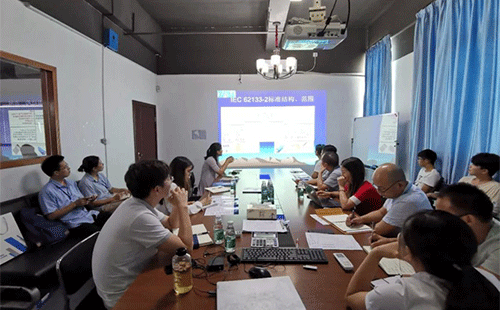
Center Certification & Testing International
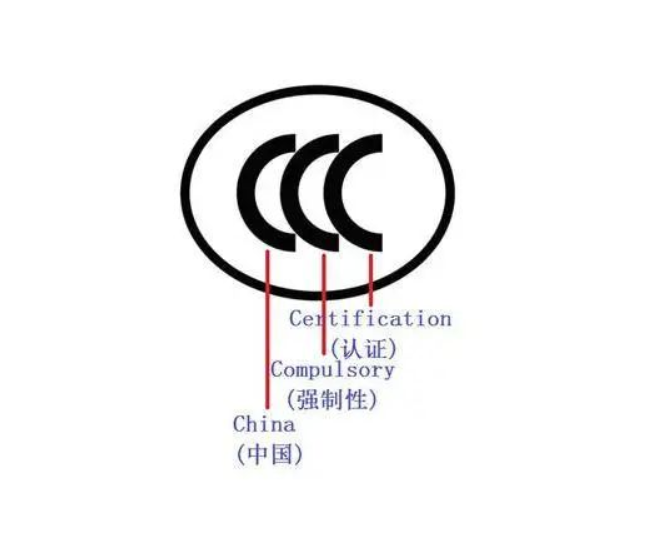
In the current era of rapid technological development, polymer batteries, with their advantages of high energy density, light weight, and good safety performance, are widely used in various electronic products such as smart phones, laptops, and power tools, becoming an important \"energy heart\" that supports modern life. However, to ensure the quality and safety of such battery products, CCC certification has become a crucial step for them to enter the market.
In the current era of rapid technological development, lithium-ion batteries, with their advantages such as high energy density and long cycle life, are widely used in portable electronic products, electric vehicles, energy storage devices and other fields, becoming an indispensable part of modern life. However, with the rapid expansion of its market size, products of varying quality have flooded the market. Some inferior batteries have caused safety accidents such as fires and explosions, seriously threatening the lives and property of consumers. Against this backdrop, the CCC certification system for lithium-ion batteries emerged, aiming to regulate the market and ensure safety.
In the era of vigorous technological development, square batteries, with their unique advantages, have been widely applied in numerous fields. However, before entering the market, it must cross the crucial threshold of CCC certification. So, what exactly is CCC certification? What significance does it have for square batteries? Let\'s explore it in depth together.
In the current era of rapid technological development, pouch batteries, with their lightness, thinness, high energy density and good flexibility, are widely used in various electronic devices and have become an important force driving the development of the industry. However, as its application scenarios continue to expand, security issues have become increasingly prominent. To safeguard consumers\' rights and interests and regulate market order, the CCC certification for pouch batteries has emerged.
Air purifiers, with their ability to remove pollutants such as particulates and formaldehyde, are suitable for various household and commercial scenarios and are a popular category of environmentally friendly household appliances for export to the European Union. To enter the markets of the 27 member states of the European Union, these air purifiers must obtain CE certification. The CE certification is a mandatory entry system in the EU, integrating multiple requirements such as electrical safety, electromagnetic compatibility, and environmental protection. It is a universal certificate for the legal customs clearance and market entry sales of air purifiers. Failure to obtain certification or proper labeling will result in risks such as customs detention, fines, and market withdrawal.

The charger, as a core electronic component for cross-border export to the UK, is compatible with various digital devices such as mobile phones and tablets. With its wide power range, portability, and strong adaptability, it has consistently occupied the essential position in the UK\'s electronic accessory market. Since the Brexit, the UKCA certification has fully replaced the CE certification and has become the mandatory entry certificate for chargers to the UK (England, Wales, Scotland) market. It is implemented by the British government and differs from the EU CE regional certification. The core focuses on electrical safety, electromagnetic compatibility, and environmental compliance. Products that fail the certification cannot be cleared through customs and will face detention, fines, and market withdrawal risks.
Label printers, as the core equipment in office and commercial scenarios, have advantages such as portability, dual-mode compatibility (wired and wireless), and precise printing. They are popular office consumables for cross-border export to the United States. To successfully enter the US market, FCC certification is an indispensable legal mandatory entry threshold. It is led and implemented by the US Federal Communications Commission (FCC), focusing on the electromagnetic compatibility of the equipment. Label printers must legally pass the US customs and be sold and circulated within the country to obtain the core certificate. Failure to obtain certification will directly result in goods being detained, fines, and inability to conduct legal operations.
Thanks to its core advantages of wireless control, high-altitude aerial photography, and low-altitude operations, unmanned aerial vehicles (UAVs) are widely used in aerial mapping, outdoor exploration, and other fields. They are popular technology products for cross-border export to Canada. To enter the Canadian market, they must obtain the ISED certification - a mandatory entry certification led by the Department of Innovation, Science and Economic Development of Canada, which was formerly known as the IC certification. The core regulation is about the wireless radio frequency performance and electromagnetic compatibility of UAVs. It is a necessary certificate for the legal customs clearance and market entry sales of UAVs. Without certification, there will be risks such as goods seizure, fines, and even product recall.
Learn the latest exciting content

Tik Tok