Products made in China need to be exported to other countries around the world, and they usually have to meet local safety certification standards before they can be sold in the region. Because each country has its own national conditions, different geographical environment, national culture, living habits and national protection awareness, this has prompted most countries to formulate a set of product standards suitable for their national conditions to protect their citizens. Safety and environment. In this way, as long as the products are exported to different countries, the standard requirements are different. Therefore, a third-party testing agency has emerged to conduct product testing and certification in a fair, authoritative and objective way to evaluate whether the exporting country meets the standard requirements. The following are some of the certifications required for Chinese exports to overseas products:
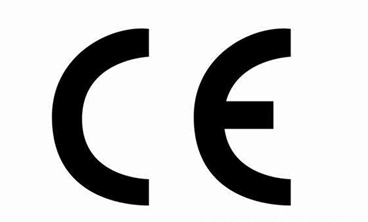
1. CE: A safety certification mark, regarded as a passport for manufacturers to open and enter the European market. CE stands for CONFORMITE EUROPEENNE. All products affixed with the "CE" mark can be sold in the EU member states without meeting the requirements of each member state, thus realizing the free circulation of goods within the EU member states.
2. ROHS: RoHS is the abbreviation of "the Restriction of the use of certain hazardous substances in electrical and electronic equipment" (the Restriction of the use of certain hazardous substances in electrical and electronic equipment). RoHS lists six hazardous substances, including: lead Pb, cadmium Cd, mercury Hg, hexavalent chromium Cr6+, polybrominated diphenyl ether PBDE, and polybrominated biphenyl PBB. The European Union began to implement RoHS on July 1, 2006. Electrical and electronic products that use or contain heavy metals and flame retardants such as polybrominated diphenyl ethers PBDE and polybrominated biphenyls PBB are not allowed to enter the EU market.
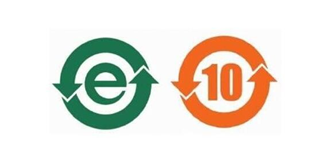
Remark: When the customer asks if there is any rohs, he should ask him whether he wants finished rohs or raw material rohs. Some factories can't make finished rohs. The price of rohs is generally 10%-20% more expensive than ordinary products.
3. UL: UL is the abbreviation of Underwriter Laboratories Inc. in English. The UL Safety Laboratory is the most authoritative in the United States and a larger private organization engaged in safety testing and identification.
Remark: UL is not mandatory to enter the United States.
4. The FCC (Federal Communications Commission, US Federal Communications Commission) established COMMUNICATIONACT in 1934 as an independent agency of the US government, directly responsible to Congress. Importers and customs agents need to declare that each radio frequency device complies with FCC standards, that is, FCC license.
5. CCC: China Compulsory Certification, the English name is "China Compulsory Certification" and the English abbreviation is "CCC". As the three-in-one "CCC" certification of National Safety Certification (CCEE), Import Safety Quality Licensing System (CCIB), and China Electromagnetic Compatibility Certification (EMC), it is an advanced international standard by the General Administration of Quality Supervision, Inspection and Quarantine and the CNCA Signs are of irreplaceable importance.
6. PSE: It is a certification mark given by Japan JET (Japan Electrical Safety & Environment) for electronic and electrical products that comply with Japanese safety regulations. According to Japan's DENTORL Law (Electrical Device and Material Control Law), 498 products must pass safety certification to enter the Japanese market.
For more relevant information, please contact our company and a professional engineer will answer you online. ZRLK has focused on testing and certification of batteries and peripheral consumer products for 15 years, always paying attention to changes in national regulations, and providing customers with one-stop certification services in multiple countries and regions to ensure that your products quickly enter the target market.